What Is a Digital Product Passport?
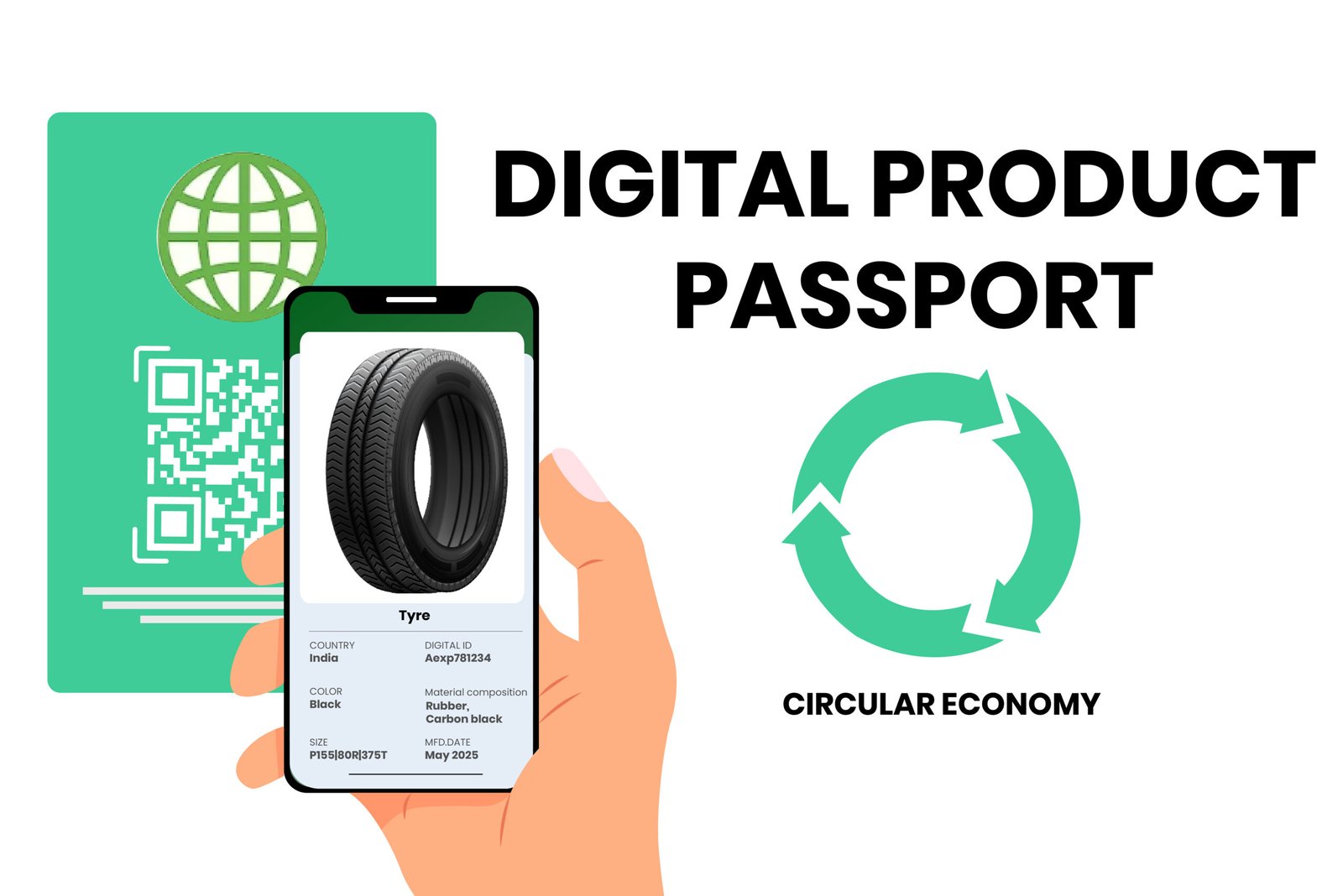
A Digital Product Passport is a QR/NFC-linked digital record of a product containing detailed lifecycle information, origins, materials, certifications, carbon footprint, repair history, recycling instructions, and more. With rising global regulations, businesses are now required to attach these passports to all goods sold in regions like the EU by 2030.
Evolution – How it started
2015 – First Circular Economy action plan
To help stimulate Europe’s transition towards a circular economy, foster sustainable economic growth and generate new jobs
2019 – European Green Deal launched
A transformative plan to shift Europe toward climate neutrality by 2050
2020 – Circular Economy action plan unveiled
A commitment to halve resource use impact and double reuse rates by 2030
2024 – Ecodesign for Sustainable Products Regulation (ESPR) adopted
From July 18, 2024, ESPR mandates strong product design standards, including Digital Product Passports (DPPs)
2025-2030 – DPP rollout for key industries
By April 2025, DPPs become mandatory for many sectors; full rollout expected across 30 product categories, including textiles, electronics, furniture, batteries, and construction, by 2030
Recent developments worldwide
- Europe: ESPR passed in October 2024, covering textiles, electronics, toys, construction, batteries, and more. Full implementation is expected by 2030 .
- Fashion & Luxury: Consumers need strong demand for origin, authenticity, care, warranty, resale and repair info.
- Engaging the consumer: A collaboration between IoDF and Epam aims to make DPPs engaging, incorporating storytelling, blockchain provenance, resale royalties, personalization, and community interactions.
Use cases by industry
| Industry | Use Cases |
| Fashion & Textiles | Track materials, labor conditions, wash-care, upcycling/recycling paths |
| Electronics | Source rare metals, carbon footprint, repair potential, proper e-waste disposal |
| Automotive | Battery history, recycled parts, emissions tracking, service recalls |
| Construction | Material sourcing, CO₂ footprint, safety certifications, reuse logs |
Benefits of DPP
- Transparency & Trust – Consumers get verifiable details, reducing counterfeits and greenwashing.
- Circular Economy – Easier repair, resale, recycling. Supports product-as-a-service and rental models.
- Regulatory compliance – ESPR mandates lifecycle data. DPPs centralize compliance and minimize fines
- Operational efficiency – Streamlined recalls, quality control, product management.
- Consumer engagement – Brands can tell stories, offer customization, co-creation, build loyalty
Challenges & implementation issues
- Data complexity & standardization – Aggregating consistent data across multiple systems and suppliers is tough
- Legacy system integration – ERP systems aren’t always DPP-ready; they require heavy customization
- Security & privacy – Sensitive commercial or personal information demand encryption, blockchain or access controls
- Costs & SMEs – Significant investment in tech, training; small/medium businesses may lack resources
- Interoperability & standards – Different industries and regions require global harmonization
- Change management – Stakeholders need education, buy-in; public awareness campaigns are vital
Enhancing the resale market
DPPs can revolutionize the resale market by providing accurate, authenticated, and complete information for pre-owned goods. It could lead to a more circular economy where luxury items have extended lifecycles.
Authentique’s Survey on luxury reveals the consumer interest
- Current secondhand buyers: 25%
- Potential buyers with DPPs: 56%
- Belief in DPPs facilitating resale: 65%
Implementation steps for manufacturers
- Start small – Pilot with QR codes, build consumer familiarity
- Centralize data governance – Define ownership, oversight, accuracy responsibilities
- Choose interoperable systems – Leverage APIs, cloud, blockchain, and AI
- Invest in cybersecurity – Use encryption, access-control, regular audits
- Train & engage stakeholders – Provide workshops, guides, public awareness to support uptake
Future trends
- Integration of AI & blockchain – For predictive analytics (lifespan, recycling) and tamper-proof authentication
- Global adoption – Moving beyond EU regulations; North America & Asia will explore DPPs
- New business models – Rental, resale, repair services flourish with consumer data and trust
Imagine
You buy a designer jacket. You scan its passport and see it was made in Italy from recycled fabrics, recycle information and you can see the entire product lifecycle. The brand messages with maintenance tips, you resell it later via the passport.
DPPs are becoming legally required (EU by 2030) and essential for brand trust. Real world pilots show significant consumer interest and value across industries. Benefits include transparency, circularity, efficiency, engagement, but challenges remain in data, security, and management. Solutions involve phased rollouts, standards, and stakeholder education.