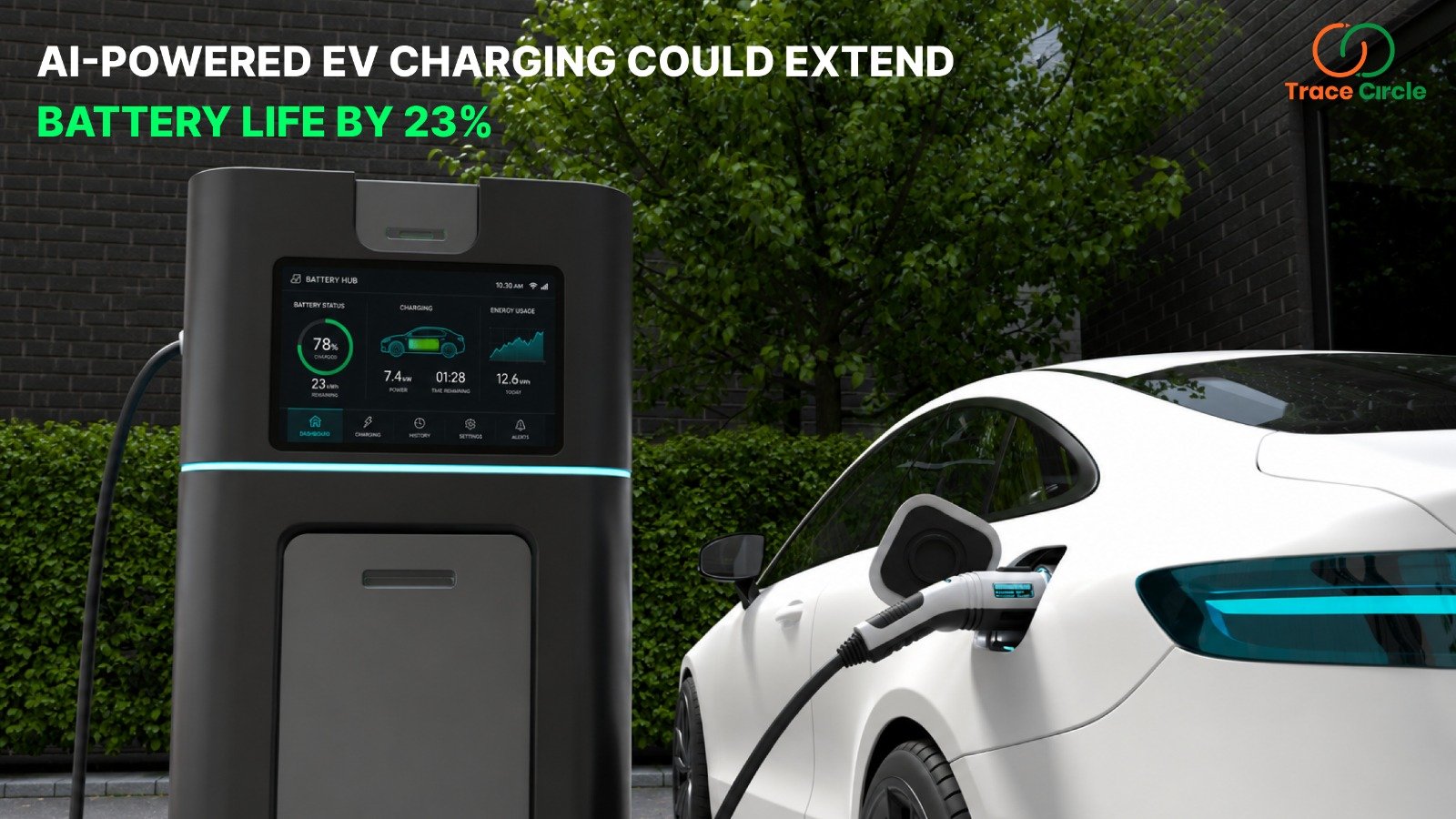
Researchers in Sweden have developed an artificial intelligence-based charging system that could extend the lifespan of electric vehicle batteries by nearly 23%, potentially reducing electronic waste and improving the sustainability of electric transport.
The study, conducted by researchers at Chalmers University of Technology, found that AI can optimize fast-charging processes by continuously adjusting charging currents based on a battery’s condition.
Unlike conventional charging systems, the AI model uses reinforcement learning to adapt charging patterns as batteries age. By monitoring factors such as battery chemistry and state of health, the system aims to minimize stress during fast-charging cycles.
As components like the anode, cathode and electrolyte age, the AI modifies the charging current to reduce stress during fast-charging cycles.
The adaptive nature of this system makes it to learn and improve its charging strategy consistently as the battery ages, offering greater benefits over time.
Some estimates suggest a Tesla battery can last from 300,000 to 500,000 miles, depending on usage and charging patterns. A 23% improvement could translate to nearly 70,000 extra miles on the low end and more than 100,000 additional miles on the high end.
One of the key challenges facing EV batteries is lithium plating, a process in which lithium ions accumulate on the anode during rapid charging, accelerating battery degradation. The AI-powered system learns optimal charging strategies to reduce this effect and preserve battery performance over time.
Technology could help extend the usable life of EV batteries, lowering material waste and supporting the transition to more sustainable transportation systems.
AI isn’t just helping batteries charge faster,it’s helping them age slower, unlocking a longer and greener future for electric vehicles.