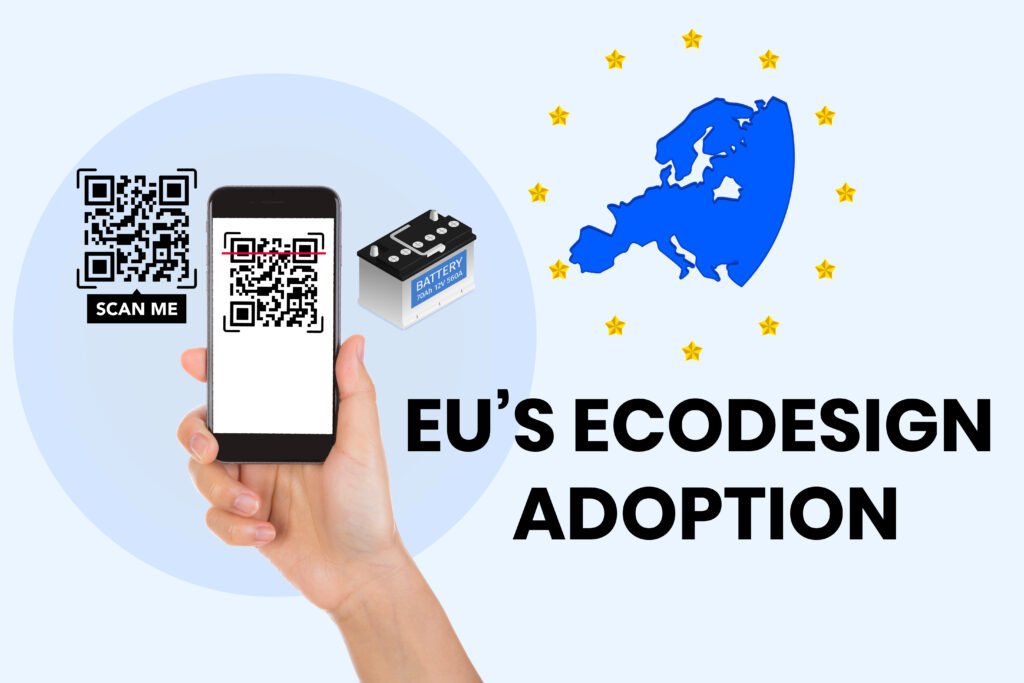
Europe is laying down the blueprint for a circular revolution. Under the Ecodesign for Sustainable Products Regulation (ESPR), the EU is launching Digital Product Passports (DPP) and by 2030, every regulated product in Europe will carry one.
The goal? Simple on paper, ambitious in scale: close the loop. By embedding circularity into the core of product design, the EU wants to turn waste into value, and products into services.
What’s a Digital Product Passport?
It’s a digital file that follows a product from cradle to grave showing exactly what it’s made of, how it was built, where it came from, and how it can be repaired, reused, or recycled.
Why it matters now
Circular Economy
DPPs make it easier to identify valuable materials, track them across lifecycles, and keep them in use longer, reducing both waste and raw resource extraction.
Eco-Design
No more planned obsolescence. Products will have to meet circular performance benchmarks from durability and repairability to recyclability and reused content.
Real-Time Product Data
Consumers, recyclers, regulators, and repair shops will all access the same verified data — cutting through greenwashing and unlocking new circular services.
Reverse Logistics
The DPP gives second-hand marketplaces, rental platforms, and recyclers the info they need to extract value post-use, not dump it.
Smart Regulations
From batteries to textiles, electronics to construction materials- sectors will face new circularity rules backed by DPP data trails.
Who’s affected
Manufacturers
If you make it, you need to prove it’s circular-ready. From materials to the afterlife, every step is traceable.
Retailers & Brands
Transparency will be mandatory. If your product can’t show its repairability score or recycled content, it might not make the shelf.
Recyclers & Remanufacturers
DPPs are a goldmine of structured data making it easier to sort, repair, and reuse at scale.
Consumers
This flips the script. With real info at your fingertips, you’re no longer buying blind. You’ll know if that phone is repairable or if your jacket is made from recycled polyester.
Europe is setting the global tone
By embedding circularity into the product DNA and enforcing it through DPPs the EU isn’t just changing how goods are made. It’s creating a model for the rest of the world.
If you export to Europe, your products need a passport.
If you want to stay competitive, circularity is necessary.