As electric vehicle (EV) adoption accelerates globally and demand for stationary energy storage rises in parallel, concerns about the resilience of battery supply chains are growing.
The rapid increase in demand for materials like lithium, nickel, and cobalt is putting pressure on mining, refining, and processing capacity. While geological resources are available,
scaling up production quickly enough presents a significant long-term challenge.
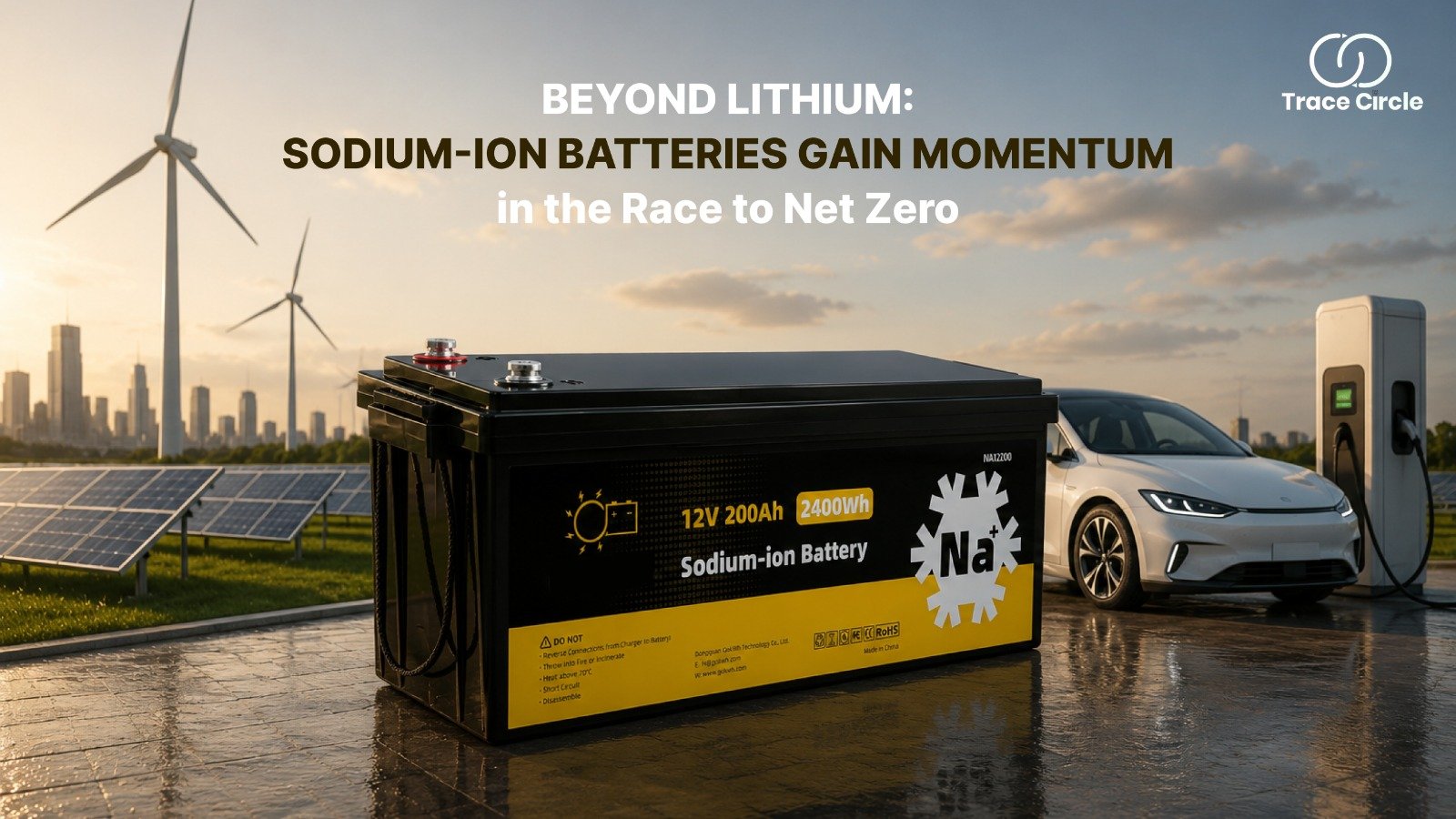
Sodium-ion batteries are unlikely to replace lithium-ion technology in the foreseeable future. Recent advances suggest they could play an important supporting role in the battery ecosystem, particularly in applications where cost, safety and resource availability matter as much as energy density.
Recent technological advances indicate sodium-ion battery could serve as an important complementary solution, especially in applications where safety and material availability are as critical as energy density.
Narrowing the Performance Gap
Sodium-ion batteries have been researched for decades, but their commercial viability was previously limited by lower performance. Because sodium ions are larger and heavier than lithium ions, they have historically struggled to match the energy storage capacity of
lithium-based batteries in the same volume.
That gap is closing rapidly.
In 2021, CATL introduced its first-generation sodium-ion battery with an energy density of around 160 Wh/kg. By 2025, its second-generation Naxtra battery reached 175 Wh/kg in mass
production, with next-generation versions aiming to surpass 200 Wh/kg.
For context, widely used Lithium Iron phosphate (LFP) batteries in EVs typically deliver 160–200 Wh/kg, while premium lithium chemistries can reach 250–300 Wh/kg.
Sodium-ion batteries are now approaching the performance of mainstream LFP cells and also provide better safety characteristics, with a lower risk of overheating.
With these improvements, sodium-ion technology is transitioning from pilot projects to commercial deployment. The first sodium-ion powered vehicles have already hit the market, primarily in smaller segments such as two-wheelers and compact urban EVs, achieving ranges of approximately 400 km.
Supply Chain Advantages
The greatest strength of sodium-ion batteries lies in their raw material abundance.
Sodium is readily available from salt deposits and seawater, avoiding the geographic concentration and price volatility issues that affect lithium, cobalt, and nickel supply chains.
It helps diversify battery supply chains, reduces dependence on critical minerals, and has the potential to lower overall material costs by minimizing the use of expensive metals like cobalt
and nickel.
Key Opportunities for Sodium-Ion Batteries
1. Stationary Energy Storage:
- As renewable energy penetration increases, cost-effective, safe, and long-lasting batteries are needed for grid balancing and supporting EV charging infrastructure.
- Sodium-ion batteries could excel here, especially for managing peak demand and enabling faster grid integration without expensive upgrades.
2. Entry-Level and Urban Electric Vehicles
- Sodium-ion technology is ideal for affordable city cars where maximum range is less important than price and practicality.
- These make up a large portion of electrification, especially in Asia. Chinese companies like Yadea have already launched sodium-ion scooters, and BYD is constructing a 30 GWh factory focused on micro EVs and two-wheelers.
Source: EV infrastructure news