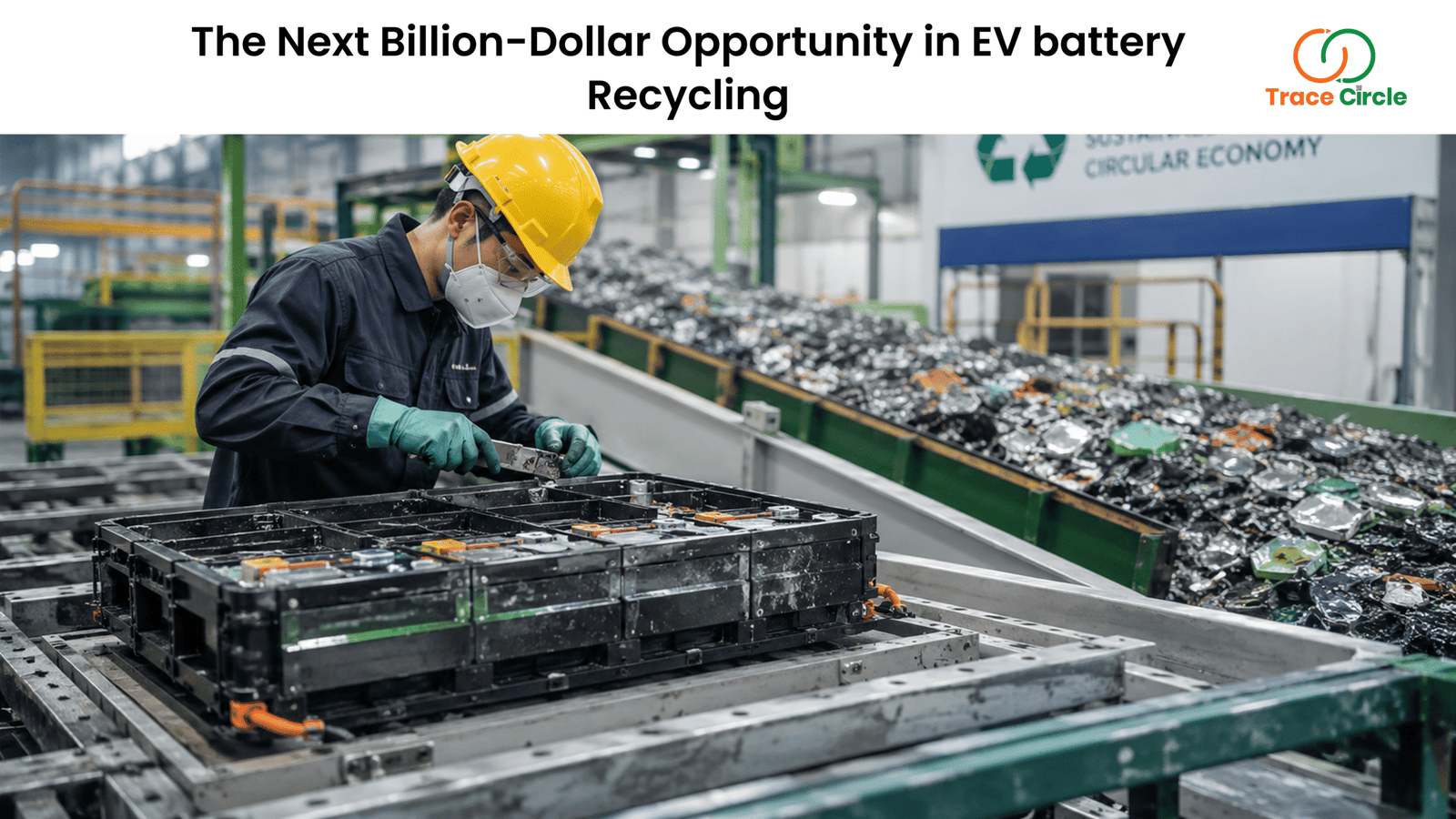
EV Battery Recycling Emerges as a Multi-Billion-Dollar Industrial Opportunity
As millions of EV batteries approach the end of their first life, a new multi-billion-dollar industry is taking shape around what comes next.
What happens to millions of batteries once they reach the end of their useful life?
Retired EV batteries are no longer viewed as waste but as a valuable resource capable of driving the next phase of the clean energy transition.
The scale of the challenge is significant. According to reports, the retired EV batteries could reach 20.5 million tonnes globally by 2040.
While China leads the world in battery recycling infrastructure, an estimated 20–30% of retired batteries are still processed through informal or unregulated channels.
In other markets, including the UK, limited recycling capacity has resulted in the majority of used EV batteries remaining unprocessed.
Despite these challenges, the growing volume of retired batteries presents a major economic opportunity. EV batteries contain critical minerals such as lithium, nickel, and cobalt, which can be recovered and reused in manufacturing new batteries.
The market for recycled energy transition minerals is expected to reach $200 billion by 2040,while the global EV battery recycling industry is projected to grow to $91.7 billion by 2034.
Industry leaders are increasingly promoting a circular economy approach.
Before batteries are recycled, many can be repurposed for second-life applications such as stationary energy storage systems, residential backup power, and industrial equipment.
However, experts note that second-life applications are only a temporary solution and do not eliminate the need for large-scale recycling infrastructure.
Governments and manufacturers are already responding to this shift. New policy initiatives, including the European Union’s Battery Booster programme, alongside investments from leading battery manufacturers, reflect a broader move toward lifecycle management, circularity, and supply chain resilience.
The future of electric mobility depends on building robust systems to recover, reuse, and recycle batteries at scale.
As demand for critical minerals continues to grow, companies that invest early in circular supply chains and recycling capabilities are expected to gain long-term advantages in resource security, regulatory compliance, and operational resilience.